Renewable gas produces nominal additional carbon emissions when used.
In the future, renewable gas could be used just like natural gas, through the same reliable gas pipelines, but made using renewable resources and as such, results in less greenhouse (carbon dioxide) emissions to the atmosphere and, when produced and managed sustainably, is better for the environment than fossil fuels.
Common forms of renewable gas include renewable hydrogen and biomethane. The renewable gas we intend to deliver to your home will initially be blended with natural gas, with the longer term goal of increasing the share of renewable gas, aiming to move toward 100% renewable and carbon neutral gas in line with Australia’s 2050 net zero targets.
55%
Aenean massa. Cum sociis natoque.
Biomethane
What is biomethane?
Biomethane is a renewable gas derived from biogas, which can be sourced from various forms of organic material such as green waste, food industry byproducts, agricultural residues and industrial waste.Biogas is composed of methane, carbon dioxide, water vapor and trace contaminants that are removed prior to utilisation. As the source material is organic the gases are categorized as “biogenic” as they are in the nature
Why biomethane?
Biomethane is a renewable gas that can be used in existing gas networks and appliances without the need for modification. Unlike fossil fuels, it’s produced from organic materials, such as plants, food, waste, or agricultural by-products, that have already absorbed carbon dioxide from the atmosphere. When biomethane is burned, it releases this same carbon dioxide, resulting in significantly lower net emissions compared to fossil fuels. This makes biomethane an effective and more sustainable energy source that can helps to reduce carbon footprintof homes, businesses and industry. Currently in Australia, biogas is largely used to generate electricity or is flared, (meaning it is being burnt off without beneficial use). There is a significant opportunity to upgrade this biogas into biomethane, which could then be injected into existing gas distribution networks and supplied to households and businesses. This approach allows customers to lower their carbon emissions using existing infrastructure and appliances, without the need for major changes, offering a practical and lower-emission energy option as part of Australia’s broader energy transition.
How is it made?
Biomethane is derived from biogas, which is produced from plant or animal waste. A process called anaerobic digestion is used, where waste is stored in tanks without oxygen. These tanks contain micro-organisms, similar to those found in the digestive systems of ruminant animals, that break down the waste to produce biogas. Biogas can be processed to remove biogenic carbon dioxide, producing biomethane. Biomethane can be fed directly into the gas network and used in the same way as natural gas, to provide heat and power to homes and businesses. The produced biogenic carbon dioxide can be collected and used to displace the use of fossil carbon dioxide in industry.
Renewable hydrogen
One example of a renewable gas is renewable hydrogen.
What is renewable hydrogen?
Hydrogen is the simplest and most abundant element in the universe and can be used as a carrier of energy.
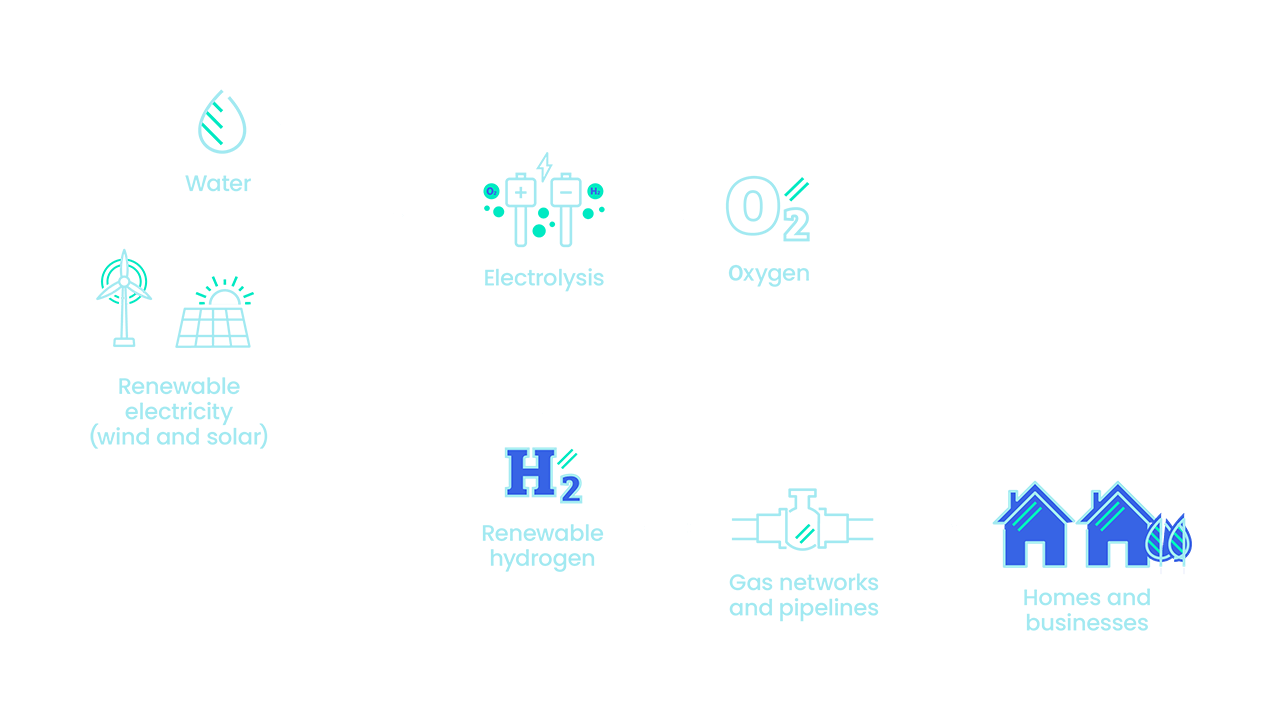
Renewable hydrogen can be produced using several methods, most commonly through electrolysis powered by renewable electricity. In simple terms, if you run an electrical current through water, it separates into hydrogen and oxygen. The hydrogen can then be captured and potentially used for cooking and heating in a similar way to natural gas.
Why renewable hydrogen?
When burned to release energy, renewable hydrogen primarily produces heat and water vapour. Hydrogen is colourless, non-toxic, and an efficient carrier of energy. In some cases, it can be delivered to homes and businesses through existing gas networks at a relatively low additional cost, so there’s no need to buy or build expensive new infrastructure. Hydrogen can be used in appliances similar to those which use natural gas, for heating, hot water and cooking appliances like your oven, cooktop or barbeque.. It’s often described as a fuel of the future, as it has a low impact on the environment by not emitting carbon emissions when burned for heat.
How is hydrogen made?
There are several ways to make hydrogen, but a key focus in Australia is on producing it using electrolysers. To make hydrogen this way, water is pumped into the electrolyser, where it’s separated into hydrogen and oxygen using electricity. This process is called electrolysis, and while it might sound futuristic, it’s not new at all! When powered by renewable electricity, like electricity generated from wind and solar), this process does not produce any additional carbon emissions, which is better for the environment. Once produced, the hydrogen can be blended with natural gas, placed into existing gas networks and delivered to your home.
Electrolysis has been around since the 1800s and used commercially since the middle of the 20th century. Its use is quickly growing around the world as the world’s focus is on decarbonising our energy supply.
H2O
(water) can be split into
hydrogen and oxygen
What is
hydrogen?
Hydrogen is the simplest and most common element in the known universe. If you studied chemistry in high-school, you’ll know that it’s number 1 on the periodic table.
Why
hydrogen?
When produced using renewable energy, hydrogen gas is 100% clean, sustainable and renewable. When used as a fuel, it emits just heat and water. In both situations, there are zero carbon emissions – which is great for the environment!
Hydrogen is colourless, odourless, non-toxic and is an excellent carrier of energy. It can also be delivered to homes and businesses through existing low-pressure pipelines, so there’s no need to buy or build expensive new infrastructure.
Renewable hydrogen is a great replacement for natural gas because it can be used in the same way for heating, hot water and cooking appliances like your oven, cooktop or barbeque. It can also be used to generate electricity or as a fuel for vehicles.
It’s considered a fuel of the future as it has a low impact on the environment and because it can be stored in large volumes within the current gas network for when its required – just like a battery for the whole country.
How is hydrogen made?
There are a number of ways to make it, but the hydrogen gas delivered to your home is produced by an electrolyser. Water is pumped into the electrolyser, where it’s separated into hydrogen and oxygen.
This process is called electrolysis – and while it might sound futuristic – it’s not new at all!
By using renewable energy (electricity generated from wind and solar), the electrolyser process is carbon-free!
Once created, the hydrogen will initially be blended with natural gas, placed into the pipelines and delivered to your home.
Electrolysis has been around since the 1800s and used commercially since the middle of the 20th century. Its use is quickly growing around the world as the world’s focus is on developing low carbon energy.
What does renewable gas mean for me?
Find out what the change to renewable gas means for you.